Lorenzo Salgado Araujo spent thirty-five years in Houston doing the same thing most mornings: getting up before sunrise, gathering his crew, and heading to a construction site. He had no criminal record. He was in the middle of the paperwork to get legal work status. Decades of that routine paid for three sons — American citizens — to go to college.
On the morning of July 7, an ICE officer shot him dead during a traffic stop.
ICE’s explanation fit a script the agency has been leaning on all year: Salgado Araujo “weaponized his vehicle,” rammed an ICE vehicle, ignored commands, and tried to run over an officer, who fired “in self-defense.” As far as the agency’s public statement was concerned, that was the whole story.
Almost nobody outside ICE believes it’s the whole story. The League of United Latin American Citizens says witness photos and video show little to no damage to Salgado Araujo’s vehicle — the opposite of what a ramming would leave behind. His son learned his father was dead from a video circulating on social media, not from a phone call. Houston’s mayor says the city has no jurisdiction to investigate, because the shooter was a federal agent. Harris County’s district attorney has opened his own parallel review and is asking witnesses to come forward — because days after the shooting, almost nobody outside the federal government has actually seen the evidence.
Mexico’s president, Claudia Sheinbaum, said her government would pursue action “beyond diplomatic notes” — a remarkable thing for a foreign head of state to say about a killing the U.S. government considers already handled.
Here’s who’s doing the handling. The Department of Homeland Security’s own Office of Inspector General is investigating the shooting. The FBI’s Houston field office isn’t investigating the shooting at all — it’s investigating whether Salgado Araujo committed a crime by “assaulting” the officer who killed him.
The people checking whether ICE was wrong work for the same department as the agent who pulled the trigger. The only other federal law enforcement looking into anything is looking into the dead man.
That’s not an oversight. It’s the structure.
The script has already failed once
You don’t have to take it on faith that the structure doesn’t work, because six days before Salgado Araujo was killed, it had already been caught not working.
On July 2 in Harrisburg, Pennsylvania, ICE agents tried to arrest a man near South 17th and Berryhill. ICE’s public account: he “weaponized” his car and rammed an ICE vehicle, so an agent opened fire. Same word. Same story. Same justification Houston would use six days later.
Except in Harrisburg, a nearby business had a security camera. The footage shows an ICE agent smashing the SUV’s window first. The driver took off only after that. ICE’s official statement never mentioned the broken window at all.
Nobody has released comparable footage from Houston. That isn’t proof Salgado Araujo’s death happened the same way. It’s proof that ICE’s own account of a shooting — the version the agency puts out before anyone else has seen any evidence — has already, at least once, left out the part that makes the agency look bad. There’s no particular reason to assume Houston is the exception rather than the rule.
This is the pattern, not the anomaly
Zoom out and it gets harder to write off as bad luck. By one count, immigration agents have been involved in at least 38 shootings and 9 deaths since Trump’s second term began in January 2025.
A Wall Street Journal visual investigation, published in January 2026, tracked at least 13 instances of immigration officers firing at or into civilian vehicles since July 2025 — at least 8 people hit, 2 of them fatally, and at least 5 of them U.S. citizens, not the “criminal illegal aliens” the agency’s press releases describe. In multiple cases, the Journal found, video showed drivers steering away from agents at the moment they were shot at, not toward them. Of the civilians fired on, only one was even armed — and that person never fired a shot. Salgado Araujo’s death, under the identical “weaponized vehicle” justification, adds a third fatality to that same pattern in the six months since the Journal’s count.
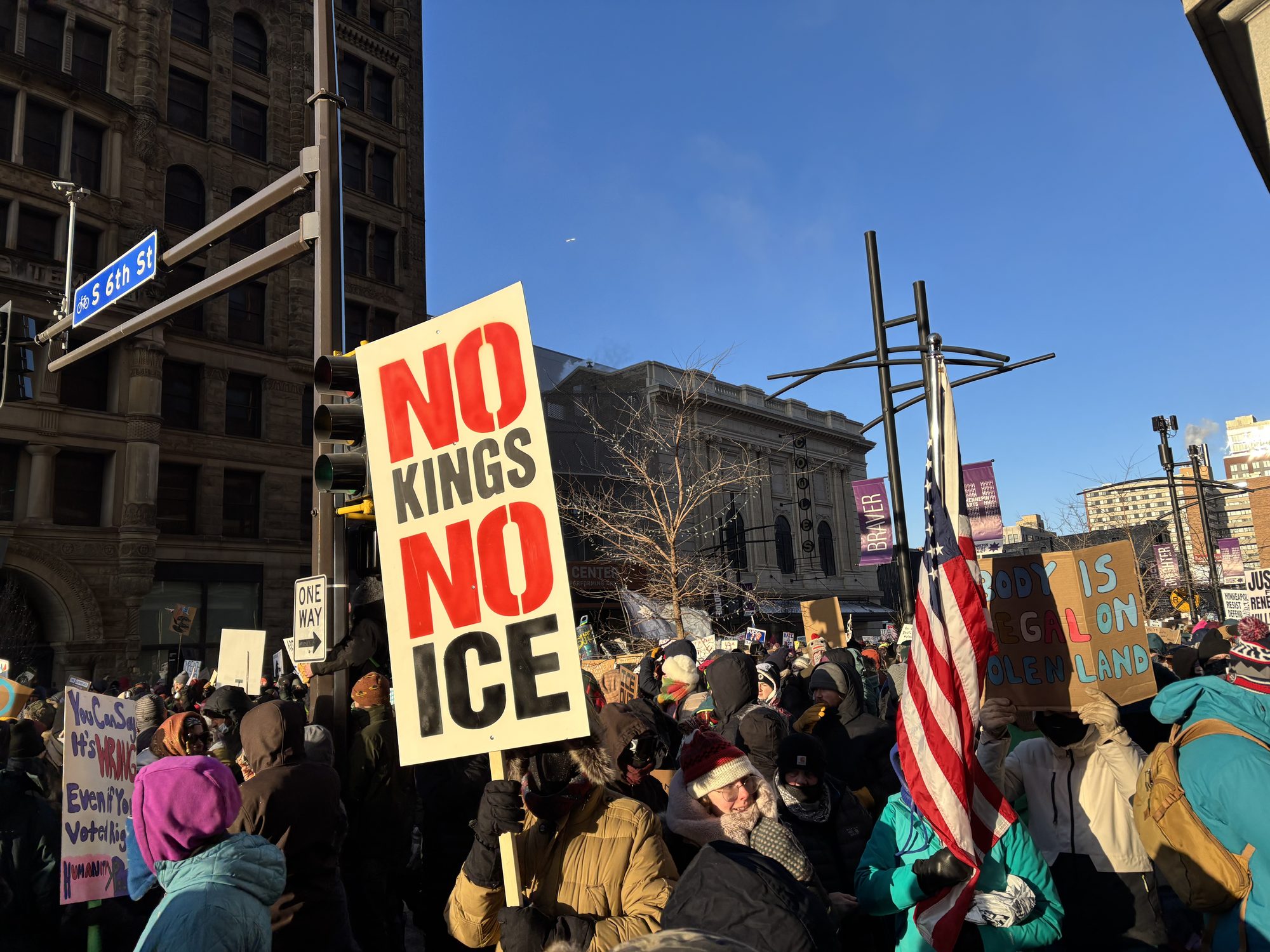
One of the citizens shot was Renée Good, killed by an ICE agent in Minneapolis on January 7 while she sat in her car. The county medical examiner ruled it a homicide. Her death set off protests in six cities — protests still going seventeen days later when Alex Pretti, an intensive care nurse with no criminal record, was shot at least ten times by two Customs and Border Protection agents after being pepper-sprayed and wrestled to the ground. No video shows him ever brandishing the gun he was reportedly carrying. The Justice Department opened a civil rights investigation into that shooting — and then, according to local and state officials, withheld evidence from their own parallel investigations, including the agents’ identities, which only became public after ProPublica identified them independently.
Between Good, Pretti, and Salgado Araujo, federal immigration agents have killed at least three civilians during enforcement operations in the last six months. Nobody has been charged in any of the three.
The point isn’t that every shooting was unjustified
None of this requires believing every person federal immigration agents have shot was innocent, or that every officer who fired a weapon acted in bad faith. It requires believing something narrower, and much harder to argue with: an agency should not be the sole judge of whether its own killings were justified.
Right now, that’s exactly the arrangement. DHS investigates DHS, whether the agents involved wear ICE or CBP on their vests. The FBI investigated whether Salgado Araujo committed a crime, not whether the officer who killed him did. The Justice Department’s civil rights probe into Pretti’s death was, per local and state officials, starved of evidence by the same federal government running it. There is no independent civilian body with the power to compel these agencies to release video, discipline an agent, or refer a case for prosecution over their own objection. A hometown police department, for all its flaws, usually answers to a city council, a civilian review board, a local prosecutor who doesn’t report to the police chief. ICE and CBP answer to themselves.
Arrests are accelerating — more than 10,000 people in five days in late June alone. Every one of those encounters is a chance for a stop to end in a trigger pull. The number of shootings has grown with the number of arrests. The accountability structure hasn’t grown at all. It’s the same one it was in January 2025: these agencies investigate themselves, release what they choose to release, and call the matter closed.
Lorenzo Salgado Araujo’s family is still waiting for the video. So is everyone else.